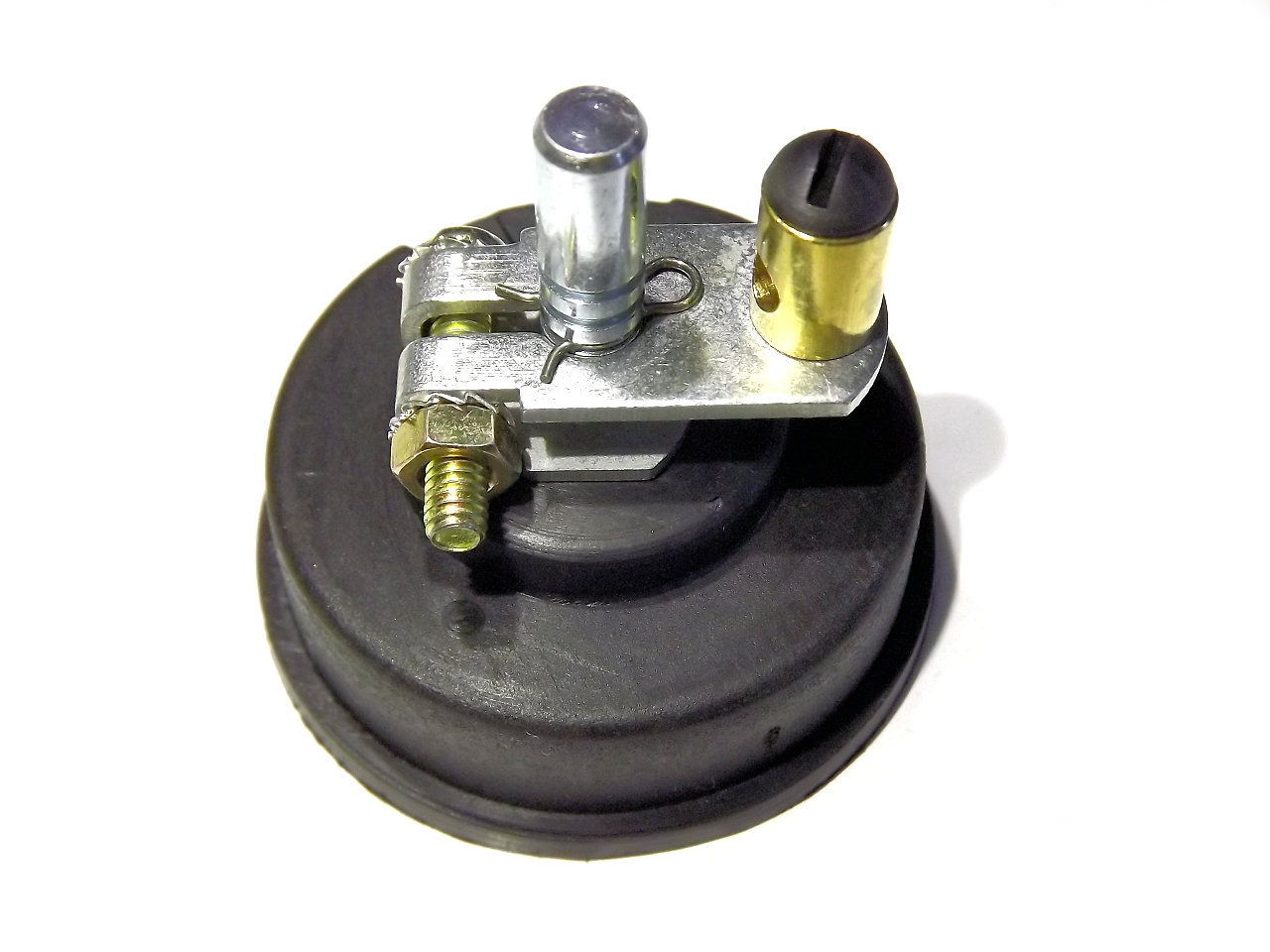
WEBER 32/36 DGAV DGEV 38 DGAS DGES CARBURETOR MANUAL CHOKE CONVERSION KIT
$ 22
Part number: ST2357
Manufacturer: FAJS
WEBER 32/36 DGAV DGEV 38 DGAS DGES Carburetor Manual Choke Conversion Kit
Manual choke conversion element for selected Weber progressive and performance carburetors. The assembly provides driver-controlled cold-start enrichment by operating the choke mechanism rather than relying on the original automatic choke arrangement. This is useful when converting to manual choke control, servicing a failed automatic choke system, or restoring reliable cold-start operation.
Manual choke operation gives direct control of cold-start enrichment. Once the engine begins to warm, the choke can be progressively opened to prevent an overly rich mixture, loading, or poor throttle response. Incorrect choke linkage position, a sticking mechanism, or a mismatched element can cause difficult starting, excessive fuel use, black smoke, or hesitation during warm-up.
The listed Weber applications include 32, 32/36 DGAV, 32/36 DGEV, 38 DGAS, 38 DGES, 40 DFAV, 34 DAT, 34 DATR, 32 DAR, 32 DARA, 34 ADF, and 36 DCA carburetors. MPN ST2357 identifies this manual choke conversion kit. Verify the carburetor family and choke housing interface before installation, particularly where visually similar Weber variants use different linkage geometry or mounting arrangements.
This replacement part is suitable for carburetor service and restoration work where the original component is worn, damaged, or missing.
Reference/MPN: ST2357.
Technical role: Converts selected Weber carburetors from automatic to driver-controlled manual choke operation.
Service relevance: Supports cold-start enrichment control and may replace or restore a failed automatic choke arrangement.
What Is Included
- Manual choke conversion element for Weber carburetors, MPN ST2357
Important Fitment Note
Confirm the carburetor family and model code before ordering, including the DGAV, DGEV, DGAS, DGES, DFAV, DAT, DATR, DAR, DARA, ADF, or DCA designation where applicable. Compare the choke housing, mounting points, actuator position, linkage movement, and interface geometry with the removed component. Check the thread, seat, and contact arrangement where the element mounts to the carburetor body, and verify that the manual control linkage can operate the choke mechanism through its full range.
Compare the removed part and its markings before installation; model-family similarity alone does not confirm interchangeability.
What you see is what you get
Show all parts